Showing posts with label Restaurant. Show all posts
28 July 2018
Ryuhou, Kagurazaka (龍朋, 神楽坂), Tokyo, Japan
Chinese food
,
Far East
,
fast food
,
Japan
,
Kagurazaka
,
Restaurant
,
Tokyo
No comments
:
The casual and
reasonable Chinese restaurant in Kagurazaka serving Fried rice (炒飯 チャーハン)
It was the
very hot evening after typhoon has gone through the island of Japan. The
hotness in the ground kept the air hot and wet. I have gotten off the metro at
Kagurazaka Station to find the restaurant to have supper. After getting to the
ground floor, I reminded the small Chinese restaurant near the station, Ryuhou.
I stood behind the Yarai exit and turned left and left again on the first
corner at the bookshop. I found the yellow eaves sign with “Lamen 龍朋.” This
Japanese style Chinese restaurant, like Ramen shop, was famous as the restaurant
serving one of the most delicious Fried rice in Tokyo.


rewrite 28th June,
first 2nd, June, 2015

There are a
lot of young age, their twenties to thirties year old, customers in the
restaurant. The interior of the restaurant has atmosphere of 1960s common coffee
house in Japan. The Wall paper is polyvinyl and blotched as a lot of brown spots
of cooking oil. The furniture sets are made of wood. The interior looks very cheap
but makes us some nostalgic feeling. A lot of menu plates were lined and hung
on the wall beyond our head as the common Chinese food restaurant in Japan.
I ordered a set of Fried rice from the list.
I ordered a set of Fried rice from the list.

The set of
Fried rice was served with plain soup and fried rice. The fried rice was very simple
that they cooked with dice size roost pork, egg and spring onion. The roost
pork had very nice flavour and great texture of meat and made a lovely match
with sliced spring onion.
The soup
was also nice. It was the fish soup stock taken with dried sardine, dried
bonito and other seafood. The white brown soup stock could be served with other
noodle, like Ramen at this restaurant.
They have
very simple menu list but serve with their heart. The atmosphere is very lovely
as the haimish and daily-use common Chinese restaurant. All dishes were served
with less than one thousand yen (about eight US dollar).
rewrite 28th June,
first 2nd, June, 2015
1 December 2015
Thirty Six by Nigel Mendham, Dukes Hotel, St James, Westminster, London, UK
The modern British restaurant at the St James place
When you heard the word of "British food", what do you imagine on it? Fish and chips and ale, cottage pie, butter and toast or cocksaids pipin etc. As I reported about the Simpsons, the roast beef is one of the signature dishes from Britain. The image of the British food is biased to simple and not-delicious in Japan.
This modern restaurant is one of my favourite in London. The chef called his course as the modern British.
The interior is nicely coordinated in orange based colour and relaxed space. The lighting in the dinning room was not so bright but shined the dishes. The pictures and photographs hung on the wall are related to London (the photos used to some cars or flowers).


When you will visit London on late autumn to winter, you can have the some gibiers from the British country side. All ingredients were come from the whole UK. I really love into the venison from Scotland in late autumn. The roast degree was nice at the kitchen to keep the juicy meat tastes.

South Coast scallops
Organic carrot, sultana, caraway
Rump of lamb
Curried cauliflower, couscous, tomato,spiced lamb neck

11 November 2015
The Ryotei based taste restaurant in Nagasaki, Kiyokawa, Nagasaki (清華和,長崎), Japan
The combination of highly sophiticated Dashi soupstock and Nagasaki traditional dishes and service
100th article anniversary
The Nagasaki city has two different face in one city. One is Urakami area where is very famous as the old Catholic village and Atomic bomb ground zero, the other is Old Nagasaki city centre which has long history as the only international port in Edo era for three hundred years. These two village has been separated by the beach located in today's Nagasaki main station area. The Old Nagasaki is like Amsterdum or Antwerpen and strictly controlled by government.
This Kappo is the real Old Nagasaki. The Itacho will speak in the traditional Nagasaki distinct and his technique is very traditional Nagasaki foods. The signature of this restaurant is the courses using with the Dashi soup as cooked with Dashi soup, Osuimono (clear soup), Miso soup or cooked rice. The Dashi soup stock is the very important part in the Japanese food. There are several variation of Dashi soup made from the various ingredients like Kombu (tangle), bonito (Katsuo), tuna (Maguro), dried sea slug (Iriko) or flying fish (Ago). The combination among tangle and other dried matured fish bring you the different flavour and taste. The sense of using the Dashi soup with the ingredient is one of the most important technique in Japanese food cooking.

The counter in the ground floor. We can have lovely dinning over our dishes and counter.
The Itacho love into the fish landed to Nagasaki fisher-mans port. The seas around Nagasaki were good fishing points catching seasonal and various fishes all seasons. I love to eating Sashimi the Itacho cut and decorated on ice and to talk about the seasonal fishes with him. I recommend you to enjoy the taste and the texture of fishes.

Itacho like also charming events like some surprising or impromptu arrangements. On this visiting, he served the Champon noodle which was not listed on the menu cards. It was very luxury Champon noodle.

Address: 2-13 Funadaikumachi, Nagasaki-shi, Nagasaki-ken 850-0904, Japan
Tel: 095-822-9233
web: http://www.kiyokawa-nagasaki.com/kiyokawatop.html
27 October 2015
KushinoBou, Kushi katsu, International terminal, Haneda airport (串の坊 羽田空港国際線ターミナル店) Tokyo, Japan
Airport
,
Far East
,
Japan
,
Japanese food
,
Restaurant
,
Tokyo
No comments
:
Kushi-katsu (串カツ) is one of the popular foods in Osaka. Kushi means the stick and
katsu is fried food covered with bread powder, like Ton-katsu (Fried pork meat
with bread powder). Ingredients which were skewered with bamboo sticks were fried with
oil and raad. You can choose ingredients from meat to vegetable to enjoy the seasonal
selection of the Kushi-katsu.

the interior of Kushi no bou Haneda
In Osaka, there are a lot of stands bar of
Kushi-katsu. You will find that style stands in some station or food court
area. You can have huge variation from the menu. When you visit there, you must
take care about the important rule, as Once dip in the sauce. The rule is come
from the hygiene reasons.
This Kushi-no-Bou has the several
restaurants in Tokyo area. They serve luxury but familiar style of Kushi-katsu at
their stands. The Kushi-katsu served in this stand were arranged as the course
randomly. The food from Kansai (関西 West side of the
border control in Ausaka) was very different from that of Tokyo area (Kanto 関東 means East side from the border control in Ausaka).

the fan over the fryer

For your preparation, drop some sauces on the plate. There were Ponzu, Brown sauce, sesame sauce, mustard and salt.

Pork, Shiitake mushroom, green pepper

Eggplant, Shrimp

Kani kisu maki (Crab meat rolled with sand borer)

Tebasaki

Asparagus

Shrimp rolled with shiso leaf, Beef

Kon nyaku (made from the starch of devil's tongue.)

Ginnann (Ginkgyo nut. I chose this from the list in
addition)

rice and miso soup (with red miso)
4 June 2015
Myon ga, Okubo (名家, 大久保) Tokyo, Japan
The most
delicious Ganjang gejang (간장게장) in Tokyo


The lady
chef, the Korean calls her Omoni with their familiarity, was quiet but has a
backbone. She was very helpful and able to speak Japanese very frequently. She
served various Korean foods from small kitchen and each food was better than
that of Seoul. She came to Japan 30 years ago from Chuncheon city, Gangwon
dong.
There are
two major Korean town areas in Tokyo, Okubo and Ueno and several Korean
communities in the Metropolitan Tokyo. The Korean people historically came to
Japan on several phases, after Annexation, during Korean War and after 1980s.
After Japan-Korea Annexation, Japan merged the Korean peninsula to the Japan
territory and a lot of Korean people voluntarily crossed the Tsushima Strait to get the
better life, job and income in Japan main islands. They have got job in the dockyard or coal mine in Kyusyu. They were still staying Japan
under US military administration in Japan main islands and Korean peninsula after
World War II. During Korean War, the Korean peninsula had chaos and people left
the peninsula to escape the War. The third generation has come to Japan with
some democratic reason or commercial purpose. The Ueno area was one of the
oldest commercial Korean town in Tokyo, formed after Annexation. The Okubo area
was formed by new generation who have come to Japan after 1980s.
This
restaurant was located on the end of the city centre of Okubo Korean town.
Once, I have gone down the stairs to enter the restaurant. The interior of
restaurant was simple and had no decoration to make me so familiar with them.
The simple furniture and nice old women had made very lovely and quiet
atmosphere in the chaotic Korean town.
The service
was heart full and each dishes satisfied me. The Ganjang gejang was the very
nice season on my visiting. The flesh meat of crab was very nice and fitted
with the soy-source taste and pickled for several days. The texture and taste
were very nice. The chef has cooked raw and fresh crab for the Ganjang gejang
from the Tsukiji seafood market. She recommended the customer should come in
early crab season, end of April to May, because the crab is most delicious
season with the eggs and rich with meat.
Ganjang gejang
The Seafood
Buchimgae (Korean pancake) was also nice. The spicy chili source was simple but
essential of the Korean food. I have enjoyed the crispy cake and good texture
of the seafood.
Seafood Bushingae
In the
daytime, the area Korean origin people live is not so clean as the other area
Japanese live. A lot of dusts were spread on the street and a lot of people who
feel bored in the world were sitting around. The darkness of the evening had
covered the all thing the Japanese do not like. And the bright K-pop shop white
light kept cheap pomp on the street. I hope the residents in Okubo love their
town and clean up the street. The general Japanese will fell it is easy to
visit Korean towm.
31 May 2015
Park 75, Four seasons hotel Atlanta, Atlanta, geogia, USA
American food
,
Atlanta
,
Hotel
,
Restaurant
,
USA
No comments
:
Park 75 is the main dinning of Four seasons hotel Atlanta, one of the most luxury hotels in Atlanta. The beef steak is my favourite one in Atlanta.
As the first course, I usually have some seasonal dishes. On this visiting, I ordered the tuna with yuzu-bonzu. The tuna was nicely matured and nice flavour with yuzu. But the taste was a little bit salty. For Japanese, I can feel some nostargic on this dish.

The beef steak was served by ounce. I have six ounce with midium rare. The texture and taste was very lovely. The taste was juicy with red meat and nice crispy surface. The strong American meet taste was very nice.


the entrance of the Four seasons hotel
28 April 2015
Bistro Seoul, modern Korean food, Gangnam, Seoul
The Korean bistro
This bistro was located in the hotel near COEX airport bus centre. The atmosphere is modern northeastern Asia. The stelves separate the tables. A lot of porcelains are displayed on the stelves.
The client will choose from the course or a la carte. I chose the course. They served low chili dishes. Each dishes are very tasty with seashell or something DASHI like Japanese WASHOKU but added little bit spicy and hot chili on that. Very tiny chili and other herbal plants, NATSUME OUGI or Annis, were make the dishes deeply UMAMI on the natural tastes. This taste was complicated for Japanese, they have very simple but deep tongue.
All dishes are very nice but there are nothing memorable.
The water Kimchi was very delicious for Japanese.
Seafood soup with small amout of chili
9 April 2015
Tsujitome Bento, Kyoto (辻留 お花見弁当 京都) 2, April 2015, Japan
Bento
,
Far East
,
Japan
,
Japanese food
,
Kyoto
,
Restaurant
,
Traditional
No comments
:
The second article about the Tsujitome bento.
I have visited to Kyoto on early April, on the Sakura have fully bloomed. The Tsujitome, one of the most luxury Japanese restaurant in Kyoto produced the Hanami bento for enjoying with Sakura. The Hanami is the seasonal event for Japanese to feel spring coming. Under the right pink bloom and little cherry smell, we enjoy some alcohol and foods. From Heian era, Japanese enjoy the colour of flower or leaves and the states of falling them. Spring is Sakura, Autum is Momiji.
The Bento has a lot of flavor or ingridient to enjoy the Sakura.
 Sakura at Gion Higashiyama, Kyoto
 (鯛桜葉巻寿司)
(だし巻き卵)
(鱒幽庵焼きたたき木の芽)
(海老そぼろ真蒸)
(嫁菜菊菜土筆ゴマびたし)
(竹の子旨煮空揚)
(花見団子串刺し)
(ふき旨煮)
(木の芽和え)
(イカ雲丹焼き)
(一寸豆塩茹で)
(鯛の子旨煮木の芽)
(蓬麩旨煮)
(蕨含み漬)
(湯葉山椒焼き)
(若鮎木の芽焼き)
(花弁生姜)
Febrary season version was this Article.
This Bento is seasonal. If you would like to buy this, please reserve yours at Isetan Kyoto department Store. You can get ones at Basement basement floor ot this department floor. My suggestion is enjoying this bento on the Shinkansen with Japanese sake.
The contact telephone: +81-75(342)5630
I have visited to Kyoto on early April, on the Sakura have fully bloomed. The Tsujitome, one of the most luxury Japanese restaurant in Kyoto produced the Hanami bento for enjoying with Sakura. The Hanami is the seasonal event for Japanese to feel spring coming. Under the right pink bloom and little cherry smell, we enjoy some alcohol and foods. From Heian era, Japanese enjoy the colour of flower or leaves and the states of falling them. Spring is Sakura, Autum is Momiji.
The Bento has a lot of flavor or ingridient to enjoy the Sakura.
(だし巻き卵)
(鱒幽庵焼きたたき木の芽)
(海老そぼろ真蒸)
(嫁菜菊菜土筆ゴマびたし)
(竹の子旨煮空揚)
(花見団子串刺し)
(ふき旨煮)
(木の芽和え)
(イカ雲丹焼き)
(一寸豆塩茹で)
(鯛の子旨煮木の芽)
(蓬麩旨煮)
(蕨含み漬)
(湯葉山椒焼き)
(若鮎木の芽焼き)
(花弁生姜)
Febrary season version was this Article.
This Bento is seasonal. If you would like to buy this, please reserve yours at Isetan Kyoto department Store. You can get ones at Basement basement floor ot this department floor. My suggestion is enjoying this bento on the Shinkansen with Japanese sake.
The contact telephone: +81-75(342)5630
6 April 2015
2013 winter accommodation, YoYokaku, Karatsu (洋々閣 唐津), Saga, Japan
Far East
,
Hotel
,
Japan
,
Japanese food
,
Restaurant
,
Ryokan
,
Saga
No comments
:
The luxuary guest hous of Karatsu. The people in Karatsu call this Ryokan as the Geihinnkan(迎賓館 State Guest House) of Karatsu.
The interior and exterior based on very traditional Japanese style. The master and madame of this Ryokan had cordinated with some Western style. They make the library and lounge with nice small garden view. The faniture, especially Chairs, sofa or armchairs, are very comfortable for the travelar.
In the lounge, we can enjoy a cup of coffee and some travel magazine like National geographics.
The staying in Yoyokaku will be lovely holiday for all people.

The flower decoration at the entrance

The reception and entrance

The room with preparation of Futon

The lounge

The lounge
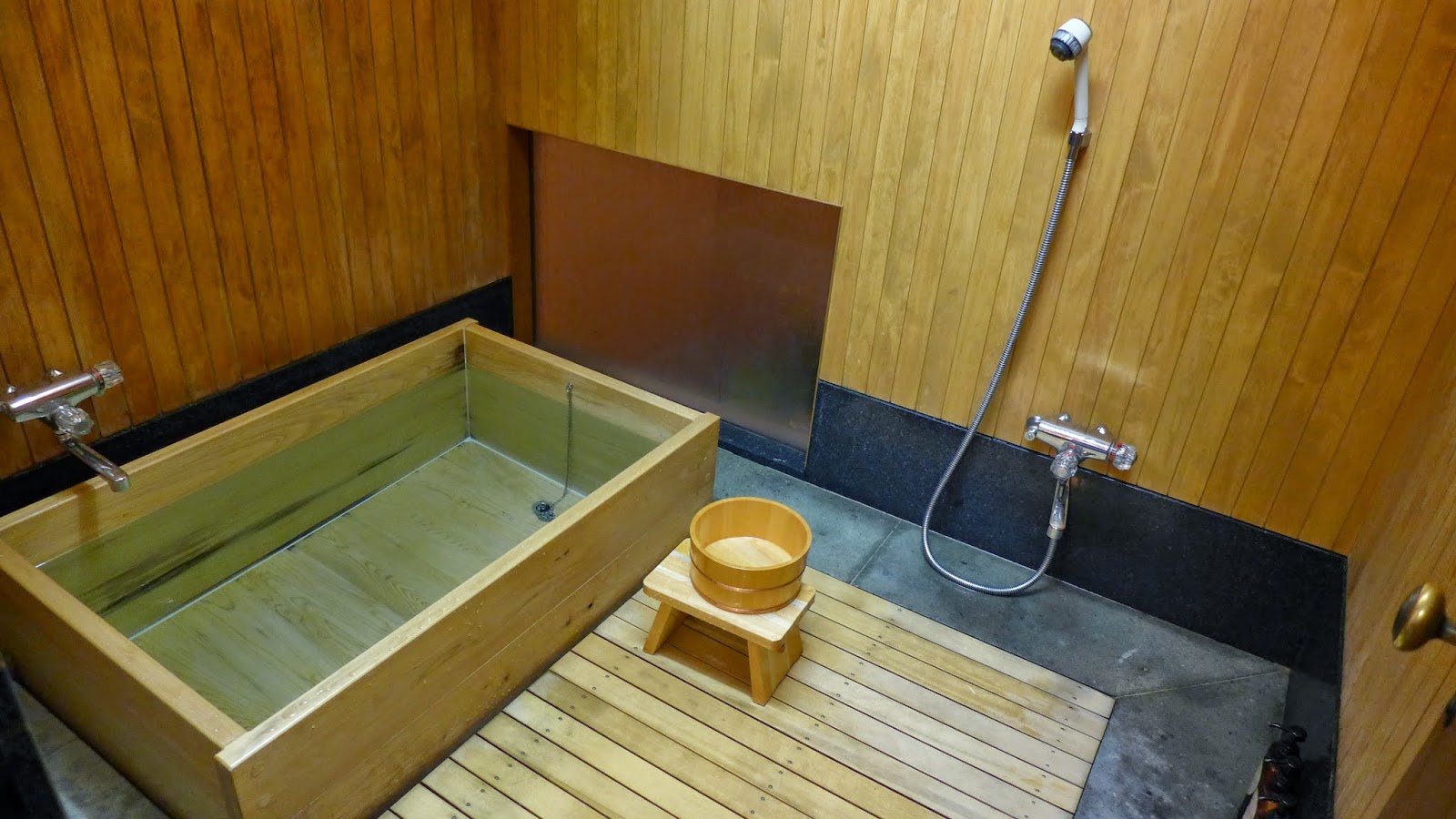
The bath room in the private room(Not public)

Garden

Garden
2014 summer, YoYokaku, Karatsu (洋々閣 唐津), Saga, Japan
Far East
,
Hotel
,
Japan
,
Japanese food
,
Restaurant
,
Saga
No comments
:
The luxuary guest hous of Karatsu. The people in Karatsu call the Geihinnkan(迎賓館 State Guest House) of Karatsu
This Ryotei-Ryokan is located at the beachside of the Genkai nada (玄界灘). The Ryotei Ryokan(料亭旅館) is the combination of the luxury dinning facility and accommodation as "Auberge" in France. This Ryokan is one of the most luxury accommodation in the Kyushu area and serving the Seasonal seafood Japanese food. The Genkai-nada sea is connecting to the Sea of Japan and very nice fishery.
The islands of Japan is floating (Japanese like this impression) among the Pacific ocean. the Sea of Japan, East China sea and the sea of Okhotsk. There are two warn currents and two cold currents around the islands; Kuroshio Current(Japan current) and Tsushima current from South and Oyashio current(Okhotsk current) and Liman current from North. These currents and Seas are producing various and delicious seafood by season and season.
This Ryokan was established one hundred years ago. The building was made of woods and as the Japanese traditional styles. The brown polished floor and black Kawara (瓦) roof made the Japanese beautiful contrast in this building. The wood cool floor is very comfortable for bare feet in the summer. Once looking out from the corridor, you will get the Japanese garden with pine tree.
Our visiting was Last July. Whenever we visit this Ryokan, the staff serve as their family and with Local style service.
On our arrival, the entrance was cool and little bit dark space. The staff had sprinkled water on the floor for cooling the air. Wet and dark grey floor was faintly shinning. The floor from upper frame member to corridor was waxed brown wood. The Okamisan (chef hostess of the Ryokan, 女将さん) appeared to see and introduce themselves and the facilities of the accommodation.
The room is two or one bed/dining room(s) and Japanese traditional style with Bath room and laboratory. The room is use for sleeping and dining as the Japanese traditional home style. The staff come to prepare your Futon instead of the bed after your dinner. The Futon on Tatami is Japanese soul style for sleeping. There are public bath rooms for ladies and gentlemen. Several rooms have the nice view of the lovely Japanese garden.
The Kue (Longtooth grouper) is served in Winter and Okoze (Stone fish) or Tai (Sea bream) are in Spring to Summer. The special course will be served the different cooking style with using same Fish.


We selected the Okoze course. The Usudukuri was cooked with Okoze. Okoze is white and clear meat fish. All courses were served as the seafood course, but you will arrange the course by your request before your arrival. All course will be very nice. Unfortunately I have little photo data so I cannot remember the menu. But I can remember the seashore like smells and sweet seafood taste with fireworks sounds. The Usudukiri of Okoze and Sashimi of Japanese spiny lobster were great.
I have the other articles on the another visiting: dinner and accommodation .
I have the other articles on the another visiting: dinner and accommodation .

All dishes are came from the Ryuta-kiln, Karatsu-yaki ceramics. The Karatsu-yaki was established on the end of sixteenth century. The Korean potters come from the Korean peninsula and developed the Japanese Wabi-Sabi and Cha-do cosmos wears. The Karatsu ceramics are famous as the three major tea bowl producer in the ceremonial tea.
There are five major styles in Karatsu-yaki; E-Karatsu(絵唐津), Chosen-Karatsu(朝鮮唐津), Madara-Karatsu(斑唐津), Kobiki-Karatsu(粉引唐津) and Mishima-Karatsu(三島唐津). E-Karatsu was natural design painted with iron, dark brown ink. Chosen-Karatsu was design of the contrast of white and black as the landscape. Madara-Karatsu was white coating on the right brown ceramics, enjoying the failing white coating design. Kobiki-Karatsu was right yellow white coating with rough face. Mishima-Karatsu was the design embossed small flowers or crane shape. The Karatsu-yaki ceramics are generally simple and unsophisticated but make the atmosphere like small cosmos.
The Ryuta kiln is located in the country side in Karatsu city, at the small valley with Small River. The galleries are built like the cottage and wind-blowed through with green smells. We felt the nature by our nose, eyes, skins and ears. As the classical Karatsu-yaki, they produce the traditional process and motif-ed ceramics. The coating, drawing, shape, pleasant texture or weight of the Ryuta kiln products are natural and passionate.
The breakfast was also lovely, with the beautiful view of the garden. A bowl of rice. Miso-soup, pickles and broiled fish are known as the traditional home style breakfast. The broiled fish was light dried and Mirin tasted horse mackerel, one of my favourite cook style.
This Ryotei-Ryokan can handle many languages, as English, Korean or French. The only Ryotei-Ryokan which I know can serve the foreigner stress free.
The madam of this Ryokan, Okami, can speak English very frequently. She will serve from her heart with the heart of Kyushu.
The madam of this Ryokan, Okami, can speak English very frequently. She will serve from her heart with the heart of Kyushu.
Subscribe to:
Posts
(
Atom
)


