Showing posts with label Chinese food. Show all posts
28 July 2018
Ryuhou, Kagurazaka (龍朋, 神楽坂), Tokyo, Japan
Chinese food
,
Far East
,
fast food
,
Japan
,
Kagurazaka
,
Restaurant
,
Tokyo
No comments
:
The casual and
reasonable Chinese restaurant in Kagurazaka serving Fried rice (炒飯 チャーハン)
It was the
very hot evening after typhoon has gone through the island of Japan. The
hotness in the ground kept the air hot and wet. I have gotten off the metro at
Kagurazaka Station to find the restaurant to have supper. After getting to the
ground floor, I reminded the small Chinese restaurant near the station, Ryuhou.
I stood behind the Yarai exit and turned left and left again on the first
corner at the bookshop. I found the yellow eaves sign with “Lamen 龍朋.” This
Japanese style Chinese restaurant, like Ramen shop, was famous as the restaurant
serving one of the most delicious Fried rice in Tokyo.


rewrite 28th June,
first 2nd, June, 2015

There are a
lot of young age, their twenties to thirties year old, customers in the
restaurant. The interior of the restaurant has atmosphere of 1960s common coffee
house in Japan. The Wall paper is polyvinyl and blotched as a lot of brown spots
of cooking oil. The furniture sets are made of wood. The interior looks very cheap
but makes us some nostalgic feeling. A lot of menu plates were lined and hung
on the wall beyond our head as the common Chinese food restaurant in Japan.
I ordered a set of Fried rice from the list.
I ordered a set of Fried rice from the list.

The set of
Fried rice was served with plain soup and fried rice. The fried rice was very simple
that they cooked with dice size roost pork, egg and spring onion. The roost
pork had very nice flavour and great texture of meat and made a lovely match
with sliced spring onion.
The soup
was also nice. It was the fish soup stock taken with dried sardine, dried
bonito and other seafood. The white brown soup stock could be served with other
noodle, like Ramen at this restaurant.
They have
very simple menu list but serve with their heart. The atmosphere is very lovely
as the haimish and daily-use common Chinese restaurant. All dishes were served
with less than one thousand yen (about eight US dollar).
rewrite 28th June,
first 2nd, June, 2015
17 May 2016
Tokyo traditional Dumpling, Tenryu, Ginza (銀座天龍), Tokyo, Japan
Chinese food
,
Far East
,
Ginza
,
Japan
,
Tokyo
No comments
:
The Showa style Chinese food restaurant in Ginza
The Tenryu is the Chinese style restaurant in Ginza,
the heart of Tokyo. The “Chinese style” meaning, this category foods were minor
developed in Japan. The foods shape or form was kept the original from China
continent. The taste or cooking method had been changed to fit our Japanese
taste on the establishment.
Tenryu is the local popular restaurant in Ginza and is
famous as restaurant serving dumplings. The tables were filled with business
person taking lunch noon. There were also elder people who continued to have
their lunch afternoon after their retirement.

Tenryu is located on 4th Floor (3rd floor of British)
Dumpling in Japan and Ginza
Dumpling is one of the popular foods among Japanese, as Ramen, curry and rice, Udon or Soba. Curry and rice had gotten major after World War I, Ramen or dumpling had after World War II. Curry and rice which was completely deformed from the British style to Japanese style at the Imperial Navy. Ramen or dumpling had come from the Manchu, the northern part of Chinese continent.
Dumpling is Chinese style Japanese foods as Ramen,
Tenshin han (Tianjin rice, omelette topped rice with Chinese style sticky soup).
The default form of dumpling was kept through 70 years, Kawa (sheet) and Ann (stuffing).
This dish was cooked in the families in China or Japan, boiled with soup, fried
or braised. The dumpling was made as Ann minced pork meat and some vegetable
was wrapped with Kawa sheet made from flour.
 |
| the Brown tanned sheet had lovely texture. the juicy soup were spread from the stuff. |
The character of Dumpling in Tenryu was thin sheet and
juicy but simple stuff. Braised thin sheet was crispy and the warmed stuff
containing meat juice as pork soup. This marriage brought us feeling of
fullness and happiness.
 |
| the memory of Showa era. |
As the Additional order, I had braised noodle, the taste of old days of Tokyo.
Web site:http://ginza-tenryu.com
Address: 2-5-19 Ginza, Chuo ku Tokyo
11 February 2016
Mutton hot pot, NanMen ShuanRou, HouHai, Beijing (南門涮肉 后海店, 北京, 中華人民共和国), PRC
The mutton
hot pot was the popular food of Beijing. Beijinger loved this hot pot in
winter. The climate of winter in Beijing was very chilled as ears broken off.
In the Kampo medicine, the mutton meat has an effect warming the body. The
evening was chilled to the bone. The restaurant of mutton hot pot were
generally seen also in Taipei. The climate of Taiwan was very comfortable and
wet-hot. I had never felt to want to taste mutton hot pot in Taipei.
The mutton
hot pot (涮羊肉
shuan yang rou) is similar to Shabu Shabu (thin sliced beef or pork meat dipped
to pass through in the hot pot) in Japan. The soup of mutton hot pot was very
simple, boiling water with some piece of ginger, cumin, jujube, and other herbs.
The soup filled the strange shape pot which had the funnel in the centre and donut
shape pot. Under the funnel, the charcoal fire was warming the soup.
The meat of
sheep which were cut and divided each part of muscles were served as several
different words. Interestingly, each part of muscles has different taste and
flavour. I had be surprised at a deep attachment of the Chinese people to their
food once more.
The mutton
hot pot is self-cooking food. Shuan 涮 is meaning to put something into
the liquid and pass through, as ShabuShabu in Japan. After Shuan the thin
sliced meat, you dipped the cooked meat into the white sesame paste with some
raw herbs. The well-cooked meat must be safe but a little bit raw cooked one
will have nice taste for customer. The white pink colour is an aim of cooking.
The smell, juicy texture will be enjoyable.


9 February 2016
Yangrou Chuan, Kaorouji, Beijing (烤肉季 羊肉串 北京 中華人民共和国), PRC
Sheep is
the animal in Eurasian continent. Through the history of Japan, there were few
description about sheep as farm animal. Under the Buddhism and Shinto religion,
meat eating was taboo in the Japanese society till Meiji era. The custom of
breeding sheep were tried after Meiji period from the reason of military
demand. The breeding sheep, pig and cattle might not have been adapted to the
agriculture of Japan due to the steep mountains on the islands.


23 January 2016
Niku-miso Tofu and Shaoxingju Hai ball, Juuroku milli (sixteen millimetre), Kagurazaka (十六公厘 神楽坂), Shinjuku, Tokyo, Japan
Chinese food
,
Far East
,
Japan
,
Kagurazaka
,
Shinjuku
,
Tokyo
No comments
:
Chinese tapas bar for whoever love to take various liquor at
Kagurazaka
The narrow wall with navy blue tiles was the trade mark of
this bar. The space was narrow and long. The cooking stove was placed beside
the entrance. The sign of this restaurant was the trend of the letter design in Taiwan.
The chef was come from Taiwan and cooked very local tastes but major menu of Chinese food. All food will match the liking for the people who love to drink.
The selections of drink were very simple but showing the master's abilities for the blending or making. The Shaoxingjiu with Soda and the ginger soda (vodka base drink) was nice drink for the starter. The hot Shaoxingjiu was served lovely temperature for warming your body in the chilled winter evening.
The chef was come from Taiwan and cooked very local tastes but major menu of Chinese food. All food will match the liking for the people who love to drink.
The selections of drink were very simple but showing the master's abilities for the blending or making. The Shaoxingjiu with Soda and the ginger soda (vodka base drink) was nice drink for the starter. The hot Shaoxingjiu was served lovely temperature for warming your body in the chilled winter evening.

The entrance of the Chinese tapas bar
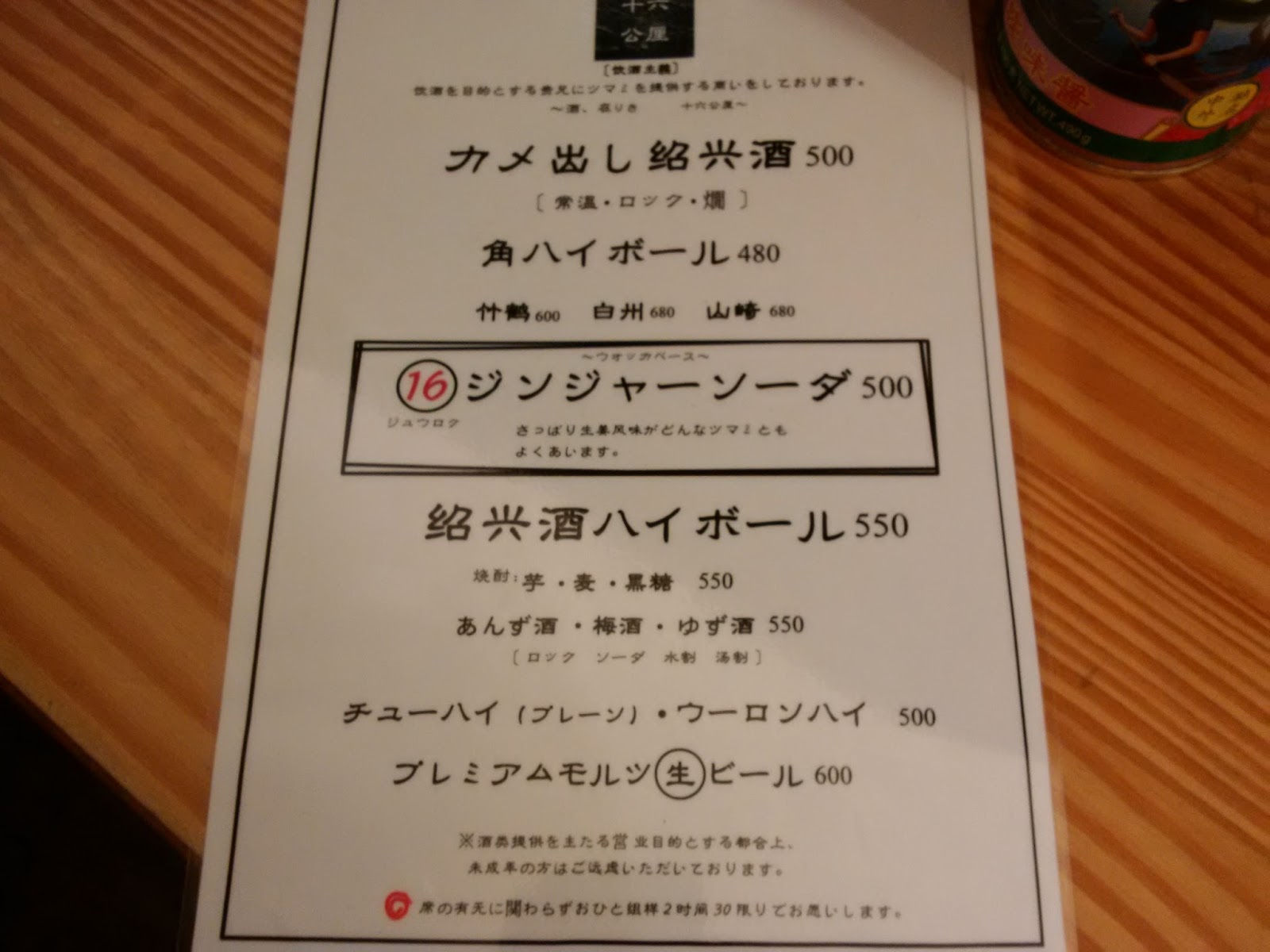
The menu card of drinks.

Niku Miso Tofu

Buta bara Itame (pork boned rib)

Braised chicken wings

22 January 2016
Chinese mitten crab (Shanghai crab), Meisyan, Kagurazaka, Shinjuku (梅香 神楽坂), Tokyo
Chinese food
,
Far East
,
Japan
,
Kagurazaka
,
Shinjuku
,
Tokyo
No comments
:
Chinese mitten crab (Eriocheir sinensis) was called as
Shanghai crab in Japan. This ingredient was very familiar to the gourmand in
Japan, Taiwan, Hong Kong and Mainland East coast of China. The season of this
crab is generally October to December.
The crab is very popular ingredients of the winter season in
Japan. Hokkaido and prefectures of Sea of Japan side had landing fisherman’s port
which had also well-known fisherman’s market. The period of fishing Kobako kani
(Kobako crab) in Ishikawa prefecture had strictly fixed from 6th
November to 29th December in female crab for preservation of this
crab spices.

spring roll of Shanghai crab
This restaurant had served the Shanghai crab as the Shanghai
style. The steamed crab were common in Chinese restaurant in Far East. The crab
pickled in Shaoxingjiu or fried spring roll with crab were served.
The crab pickled with Shaoxingjiu (drunken crab) will give
us the taste of whole body of crab meat in the spirits flavour. The Shaoxingjiu
taste and flavour was similar to matured whiskey in sherry barrels or Sherry wine,
the sweet taste and Ceylon tea like flavour. The complex flavour and taste were
stuffed into the crab meat and organs. The Kani Miso (カニ味噌 the internal organ of crab in the shell, orange to green
colour. Midgut gland, digestion system in crab) is the important part on tasting
crab meats. This part were including Umami and lipoid taste. The meat of almost-raw
crab, because this crab is just pickled in liquor for several days, has very
lovely texture, like jelly including fibre of protein and juicy body coming from
cholesterol.

The Shanghai crab pickled in Shaoxingjiu (drunken crab)

items for buttle with crab! the sciccors for shells, stick with spoon for meat.

The last one was Tantanmen
The period serving Chinese mitten crab at Meisyan (梅香) depend on the season of this crab. Usually, the season will started on late September.
21 January 2016
Beijing duck, Dai Dong, Beijing, PRC
The local but luxury space for enjoying Beijing duck

There were a lot of local people around the popular
restaurants in Beijing. All seats and table were filled with local Chinese
people. They had enjoy their evening with their family or their friends. The
broadcasting from Beijing were mainly about the political or economic topics.
We had enjoyed the nice atmosphere of the local restaurant where the local
Chinese people had had their dinner.
The course was started from the Beijing duck as the first
course. The duck was grown fat and nicely cooked. The caramel colour of the
skin was glossy. The meat was nicely cooked in the oven after well seasoning.
The sauce tianmianjiang was very sophisticated. Heyebing like the pancake was
still nice texture and thickness in itself.

Cutting into the duck

The skin of duck. The caramel glossy skin was crispy

herbs and miso sauce (tianmianjiang) for Beijing duck

Breast meat of duck eat with skin was very lovely texture and juicy.


steamed chicken

Fruit decoration

braised rum with spices

The Matsutake soup was also nice.
The presentations of the courses were modern but unfashionable.
The dry ice smoke with mandarin mountain of ice was obsolete.

20 January 2016
Beijing duck, Made in China, Grand Hyatt Beijing, Beijing, PRC
Beijing duck served by Szechuan style Chinese restaurant
Beijing duck is one of the signature dish in Chinese food. Once saying “Beijing duck”, the style or taste may be different among the Chinese local foods variation. In Japan, I had just Toh ka lin in Hotel Okura Tokyo where served very Cantonese taste Beijing duck nearly ten times. All I know about the taste of Beijing duck was only from Toh ka lin, Hotel Okura Tokyo. I had been to Beijing without Beijing local knowledge of any foods.
The Modern Chinese style interior
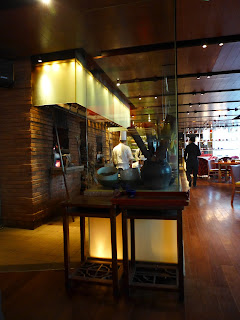
The interior was coordinated as the modern Chinese style. All items were as the icons of the Chinese traditional cultures, mold for moon cake or steamer made of bamboo. There were the cooking corner around the tables as the traditional oven for Beijing duck, stove for cooking, steam section or noodle counter. |
| The entrance |

 |
 |
| oven for Beijing duck |
The visiting to Beijing was journey with our close friends. We had seated around the round table which was placed a disc in the centre.

Steamed chicken with Szechuan chilli sauce (口水鷄 Poached chicken)

Spinach
leaves with white sesame sauce (芝麻菠菜 Spinach leaves)

Spicy potato salad (炝炒土豆丝 Shredded potato)

Gongbao chicken宫保鸡丁

Chicken wings 香辣鸡翅中

Mutton braised with spice and chilli (手扒孜然羊排Lamb rib)
Beijing duck 老式果木烤鴨
Beijing duck is the signature dish in Chinese foods. Eating all meat and cooking with all bone show thee deep attachment to the food in Chinese people. The crispy texture of skin of duck was the starter on Beijing duck service. As the next step, the breast meat or leg or wing meat will be served. The head of duck was also served to enjoy the brain of duck. As the last, soup of duck had been served. 


Skin of duck

duck meats or skin wrapped with pain

Generally, the taste of the Beijing style is graceful, less
sweet and salt. The flavour of the duck meat and seasoning was very lovely. This
restaurant is fine as the Szechuan dishes. The duck must be including profound
tastefulness.
Subscribe to:
Posts
(
Atom
)


