Showing posts with label Peoples republic China. Show all posts
11 February 2016
Mutton hot pot, NanMen ShuanRou, HouHai, Beijing (南門涮肉 后海店, 北京, 中華人民共和国), PRC
The mutton
hot pot was the popular food of Beijing. Beijinger loved this hot pot in
winter. The climate of winter in Beijing was very chilled as ears broken off.
In the Kampo medicine, the mutton meat has an effect warming the body. The
evening was chilled to the bone. The restaurant of mutton hot pot were
generally seen also in Taipei. The climate of Taiwan was very comfortable and
wet-hot. I had never felt to want to taste mutton hot pot in Taipei.
The mutton
hot pot (涮羊肉
shuan yang rou) is similar to Shabu Shabu (thin sliced beef or pork meat dipped
to pass through in the hot pot) in Japan. The soup of mutton hot pot was very
simple, boiling water with some piece of ginger, cumin, jujube, and other herbs.
The soup filled the strange shape pot which had the funnel in the centre and donut
shape pot. Under the funnel, the charcoal fire was warming the soup.
The meat of
sheep which were cut and divided each part of muscles were served as several
different words. Interestingly, each part of muscles has different taste and
flavour. I had be surprised at a deep attachment of the Chinese people to their
food once more.
The mutton
hot pot is self-cooking food. Shuan 涮 is meaning to put something into
the liquid and pass through, as ShabuShabu in Japan. After Shuan the thin
sliced meat, you dipped the cooked meat into the white sesame paste with some
raw herbs. The well-cooked meat must be safe but a little bit raw cooked one
will have nice taste for customer. The white pink colour is an aim of cooking.
The smell, juicy texture will be enjoyable.


9 February 2016
Yangrou Chuan, Kaorouji, Beijing (烤肉季 羊肉串 北京 中華人民共和国), PRC
Sheep is
the animal in Eurasian continent. Through the history of Japan, there were few
description about sheep as farm animal. Under the Buddhism and Shinto religion,
meat eating was taboo in the Japanese society till Meiji era. The custom of
breeding sheep were tried after Meiji period from the reason of military
demand. The breeding sheep, pig and cattle might not have been adapted to the
agriculture of Japan due to the steep mountains on the islands.


30 January 2016
“New Normal” of the service in the local restaurant of Mainland China?
The people in People’s Republic of China might have faced
the new phase, not only in their economics but in their industry or view of
profession. During my very short journey, I met a lot of service person of the
restaurants. The staff of the Wanda Sofitel has huge disabilities to
communicate in English, but the customer who can speak Chinese may be welcomed
by all of staff in hotel. On the other hand, the staff in the local restaurant
show us very kind and professional service.
The first memorable communication between the people in PRC
and us was at the mutton hot pot restaurant beside the Shichahai (什刹海).
The floor manager was very fair gentleman who was able to speak only in
Mandarin. He coordinated our table one hour and half after we arrived the
restaurant. There were hundred customers were waiting for their table. In the
End of the dinner, the staff had come to clear the next table to ours. The middle
age lady staff has told us how to say, ”Thank you” in Mandarin. The pronunciation
of xiexie was different among the Mandarin in Beijing and in Taipei. The sound
in Taipei was very clear and articulated.
The second one was at the Peking style local restaurant where
we had Zha jiang noodle in Quanmen. The middle class people, the communist
party will strongly deny their being, had large lunch with their friends or
families late morning. There were more than ten service staff at this restaurant.
We had ordered only Zha jiang noodle and some Chinese pancakes. The staff had
made a wondering look. The noodle was very lovely with sophisticated miso paste
and well-balanced topping. After our payment, a young lady were sent us off to
the entrance. She said me “Wear, Wear” in Chinese. The outside were very chilled climate.

The rumour of Mainland China was smile-less continent among 60s-70s
old people. Under the communism society, the service industry had never
developed. After the gauge jaufang (economic reform in PRC), the rapid growth
of tourists to Western countries may have had small outcome in the PRC society.
The upper class and middle class people had come to Japan, North America, South
East Asia countries or Europa. They had felt what the real comfortable service
is, which they had forgotten for 60 years after communism revolutions.
28 January 2016
The Great Wall, Mutianyu Chángchéng (慕田峪長城), Beijng, PRC
The new spot to feel the Great Wall of Pekin
The Great
Wall is the most popular sightseeing spot of Beijng. After the Cultural
Revolution in Mainland, almost all traditional, historical and cultural spots,
temples or things were destroyed by the communist party. The Great Wall was
restored as the Ming dynasty.

The
Mutianyu Chagcheng spot of the Great Wall was located in northern part of
Beijing. It will take one hour and half by the car about 65 km far. There were
several public transportation.
On
Arriving, you will buy the ticket for Entrance at 40 CNY (45CNY normal season).
In winter season, I strongly recommend to buy the ticket for shuttle bus, cable
car because of the chilled climate. The hiking in the mountains might be nice,
if it were clean air condition without PM 2.5. The total fee including cable
car and shuttle bus will be 155 CNY (Shuttle bus 15 and cable car 100).

The view of
wall was dynamic as the dragon had lain down on the mountains. Walking through
the wall-top by tower by tower, the view of the great wall and mountains had
changed. You must wear the comfortable shoes for climbing or hiking.
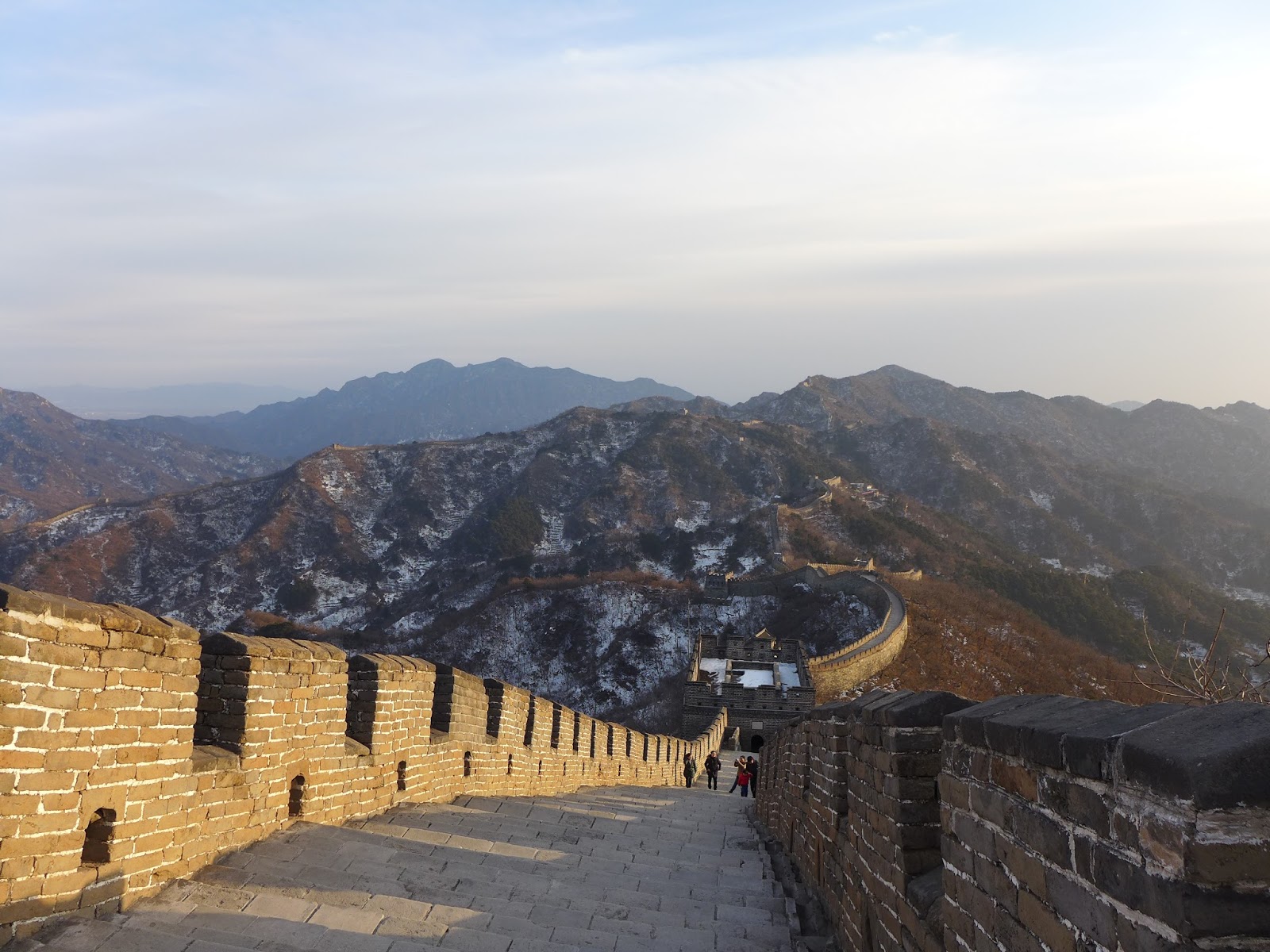
It was
January when I had visit. It was very chilly cold and the ice were frozen on
the battlement. The view of autumn season must be nice, when leaves getting red
or yellow.
21 January 2016
Beijing duck, Dai Dong, Beijing, PRC
The local but luxury space for enjoying Beijing duck

There were a lot of local people around the popular
restaurants in Beijing. All seats and table were filled with local Chinese
people. They had enjoy their evening with their family or their friends. The
broadcasting from Beijing were mainly about the political or economic topics.
We had enjoyed the nice atmosphere of the local restaurant where the local
Chinese people had had their dinner.
The course was started from the Beijing duck as the first
course. The duck was grown fat and nicely cooked. The caramel colour of the
skin was glossy. The meat was nicely cooked in the oven after well seasoning.
The sauce tianmianjiang was very sophisticated. Heyebing like the pancake was
still nice texture and thickness in itself.

Cutting into the duck

The skin of duck. The caramel glossy skin was crispy

herbs and miso sauce (tianmianjiang) for Beijing duck

Breast meat of duck eat with skin was very lovely texture and juicy.


steamed chicken

Fruit decoration

braised rum with spices

The Matsutake soup was also nice.
The presentations of the courses were modern but unfashionable.
The dry ice smoke with mandarin mountain of ice was obsolete.

20 January 2016
Beijing duck, Made in China, Grand Hyatt Beijing, Beijing, PRC
Beijing duck served by Szechuan style Chinese restaurant
Beijing duck is one of the signature dish in Chinese food. Once saying “Beijing duck”, the style or taste may be different among the Chinese local foods variation. In Japan, I had just Toh ka lin in Hotel Okura Tokyo where served very Cantonese taste Beijing duck nearly ten times. All I know about the taste of Beijing duck was only from Toh ka lin, Hotel Okura Tokyo. I had been to Beijing without Beijing local knowledge of any foods.
The Modern Chinese style interior
The interior was coordinated as the modern Chinese style. All items were as the icons of the Chinese traditional cultures, mold for moon cake or steamer made of bamboo. There were the cooking corner around the tables as the traditional oven for Beijing duck, stove for cooking, steam section or noodle counter. |
| The entrance |

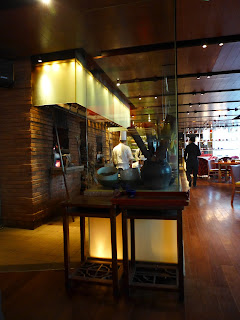 |
 |
| oven for Beijing duck |
The visiting to Beijing was journey with our close friends. We had seated around the round table which was placed a disc in the centre.

Steamed chicken with Szechuan chilli sauce (口水鷄 Poached chicken)

Spinach
leaves with white sesame sauce (芝麻菠菜 Spinach leaves)

Spicy potato salad (炝炒土豆丝 Shredded potato)

Gongbao chicken宫保鸡丁

Chicken wings 香辣鸡翅中

Mutton braised with spice and chilli (手扒孜然羊排Lamb rib)
Beijing duck 老式果木烤鴨
Beijing duck is the signature dish in Chinese foods. Eating all meat and cooking with all bone show thee deep attachment to the food in Chinese people. The crispy texture of skin of duck was the starter on Beijing duck service. As the next step, the breast meat or leg or wing meat will be served. The head of duck was also served to enjoy the brain of duck. As the last, soup of duck had been served. 


Skin of duck

duck meats or skin wrapped with pain

Generally, the taste of the Beijing style is graceful, less
sweet and salt. The flavour of the duck meat and seasoning was very lovely. This
restaurant is fine as the Szechuan dishes. The duck must be including profound
tastefulness.
Subscribe to:
Posts
(
Atom
)


